Buy automaten.info ?
We are moving the project
automaten.info .
Are you interested in purchasing the domain
automaten.info ?
domain@kv-gmbh.de · 0541-91531010
Buy automaten.info ?
What questions are there about subject-verb agreement?
Some common questions about subject-verb agreement include: 1. How do I know which form of the verb to use with a singular or plural subject? 2. What about collective nouns or indefinite pronouns - do they take a singular or plural verb? 3. How do I handle compound subjects, where there are multiple nouns or pronouns joined by "and" or "or"? 4. Are there any exceptions or irregularities to the standard rules of subject-verb agreement? 5. What are some common mistakes to watch out for when it comes to subject-verb agreement? **
What is the difference between Subject-Verb-Object (SVO) and Subject-Subject-Verb (SSV) sentences?
The main difference between Subject-Verb-Object (SVO) and Subject-Subject-Verb (SSV) sentences lies in the order of the elements. In SVO sentences, the subject comes first, followed by the verb, and then the object. In SSV sentences, there are two subjects followed by the verb. This difference in structure can impact the emphasis and clarity of the sentence, as well as the overall flow of information. **


Similar search terms for Subject-verb agreement
Top-Angebote
Products related to Subject-verb agreement:
-
Isabelle & Max Irby No Subject Kids Book Display WhiteWith countless books, it is not so easy to always find the right piece. So that your child can keep track of their treasures, there is a children's shelf. With a height of 80cm, the books can be easily sorted and pulled out, so the help of adults is not necessary. The colourful fabric boxes and the shape of the house create a romantic and fairytale atmosphere. It is undoubtedly the visual highlight of the room. Isabelle & Max113,99 £*Shipping: 0,00 £Secure redirect to the provider
-
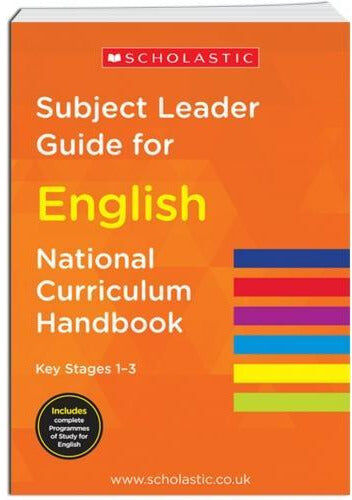
Scholastic National Curriculum Handbook Subject Leader Guide For English Key Stage 1-3National Curriculum Handbook Subject Leader Guide for English Key Stage 1-3 Description: Get ready for the biggest curriculum change in more than a decade! To help coordinators to deliver the new curriculum; Scholastic has published the first complete printed programme of study for key stages 1-3 in English. Each guide also provides a wealth of subject leader support including: an overview of the main changes to the curriculum; an overview of the subject leader's role at times of curriculum change; priority areas at each key stage; how to add creativity to the new curriculum; helpful subject leader's check-list. Scholastic; publisher of the best-selling 100 Lessons series; has partnered with Babcock Learning and Development Partnership (Devon Local Authority); one of the UK's leading school improvement services; to develop these essential subject guides.9,99 £*Shipping: 2,99 £Secure redirect to the provider
-
Inspire Daily Merch Mini Auto Drinks Vending Machine Coin Operated Kids Toy Simulation Beverage Machine For Children Christmas Pretend Play purple UnicornBring the Fun of a Vending Machine to Your Child's Playtime! Introducing the Auto Drinks Vending Machine Toys the ultimate coin operated game that brings hours of excitement and pretend play for your little ones. This mini beverage machine is...89,97 $*Shipping: 0,00 $Secure redirect to the provider



-
Is "leben" a subject or a verb?
"Leben" is a verb in German. It means "to live" in English. It is used to describe the action of being alive or residing in a particular place. **
-
What is the order of subject, verb, and object in Latin?
In Latin, the typical word order is Subject-Object-Verb (SOV). This means that the subject of the sentence comes first, followed by the object, and then the verb. For example, "puella rosam amat" translates to "the girl loves the rose," where "puella" is the subject, "rosam" is the object, and "amat" is the verb. However, Latin is a highly inflected language, so word order can be flexible and the meaning of the sentence is often determined by the case and ending of the words rather than their position in the sentence. **
-
How is the agreement of the past participle with the auxiliary verb avoir done?
In French, the past participle agrees with the direct object when the auxiliary verb is avoir. However, this agreement only occurs when the direct object comes before the verb. If the direct object comes after the verb, there is no agreement. For example, in the sentence "J'ai mangé la pomme" (I ate the apple), the past participle "mangé" agrees with the direct object "la pomme" because it comes before the verb. But in the sentence "J'ai mangé une pomme" (I ate an apple), there is no agreement because the direct object "une pomme" comes after the verb. **
-
Is there a coin-operated vending machine in Flensburg?
Yes, there are coin-operated vending machines in Flensburg. These machines can be found in various locations such as train stations, shopping centers, and public buildings. They offer a variety of products including snacks, drinks, and even everyday essentials like toiletries and phone chargers. Customers can use coins to make purchases from these vending machines. **


What is an auxiliary verb and a main verb?
An auxiliary verb, also known as a helping verb, is a verb that is used with a main verb to form a verb phrase. It helps to express the tense, mood, or voice of the main verb. Common auxiliary verbs include "be," "have," and "do." A main verb, also known as a lexical verb, is the primary verb in a sentence that carries the main meaning or action. It is the verb that is not preceded by an auxiliary verb in a verb phrase. Main verbs can express actions, states of being, or occurrences. **
Before the verb.
'Before the verb' refers to the placement of adverbs in a sentence. Adverbs are words that modify verbs, adjectives, or other adverbs. When an adverb is placed before the verb in a sentence, it typically provides information about how the action is being performed. For example, in the sentence "She quickly ran to the store," the adverb "quickly" is placed before the verb "ran" to describe how she performed the action of running. **
Top-Angebote
Products related to Subject-verb agreement:
-
Graco Verb Travel System, MerrickThe Graco Verb Travel System gives you a stylish and smooth ride for your child. It includes a SnugRide Lite Infant Car Seat (for baby from 4-30 lb), which connects to the stroller with a secure, one-second attachment.239,99 $*Shipping: 0,00 $Secure redirect to the provider
-
Uplift Picks Kids Vending Machine Toy Coin Operated Mini Drink Dispenser green (dinosaur)Bring the fun of a real shop experience home with this exciting kids vending machine toy designed for imaginative play. This realistic coin operated pretend play toy lets children insert coins, press buttons, and watch their favorite mini drinks...140,00 $*Shipping: 0,00 $Secure redirect to the provider
-
Isabelle & Max Irby No Subject Kids Book Display WhiteWith countless books, it is not so easy to always find the right piece. So that your child can keep track of their treasures, there is a children's shelf. With a height of 80cm, the books can be easily sorted and pulled out, so the help of adults is not necessary. The colourful fabric boxes and the shape of the house create a romantic and fairytale atmosphere. It is undoubtedly the visual highlight of the room. Isabelle & Max113,99 £*Shipping: 0,00 £Secure redirect to the provider
-
Scholastic National Curriculum Handbook Subject Leader Guide For English Key Stage 1-3National Curriculum Handbook Subject Leader Guide for English Key Stage 1-3 Description: Get ready for the biggest curriculum change in more than a decade! To help coordinators to deliver the new curriculum; Scholastic has published the first complete printed programme of study for key stages 1-3 in English. Each guide also provides a wealth of subject leader support including: an overview of the main changes to the curriculum; an overview of the subject leader's role at times of curriculum change; priority areas at each key stage; how to add creativity to the new curriculum; helpful subject leader's check-list. Scholastic; publisher of the best-selling 100 Lessons series; has partnered with Babcock Learning and Development Partnership (Devon Local Authority); one of the UK's leading school improvement services; to develop these essential subject guides.9,99 £*Shipping: 2,99 £Secure redirect to the provider
-
What questions are there about subject-verb agreement?
Some common questions about subject-verb agreement include: 1. How do I know which form of the verb to use with a singular or plural subject? 2. What about collective nouns or indefinite pronouns - do they take a singular or plural verb? 3. How do I handle compound subjects, where there are multiple nouns or pronouns joined by "and" or "or"? 4. Are there any exceptions or irregularities to the standard rules of subject-verb agreement? 5. What are some common mistakes to watch out for when it comes to subject-verb agreement? **
-
What is the difference between Subject-Verb-Object (SVO) and Subject-Subject-Verb (SSV) sentences?
The main difference between Subject-Verb-Object (SVO) and Subject-Subject-Verb (SSV) sentences lies in the order of the elements. In SVO sentences, the subject comes first, followed by the verb, and then the object. In SSV sentences, there are two subjects followed by the verb. This difference in structure can impact the emphasis and clarity of the sentence, as well as the overall flow of information. **
-
Is "leben" a subject or a verb?
"Leben" is a verb in German. It means "to live" in English. It is used to describe the action of being alive or residing in a particular place. **
-
What is the order of subject, verb, and object in Latin?
In Latin, the typical word order is Subject-Object-Verb (SOV). This means that the subject of the sentence comes first, followed by the object, and then the verb. For example, "puella rosam amat" translates to "the girl loves the rose," where "puella" is the subject, "rosam" is the object, and "amat" is the verb. However, Latin is a highly inflected language, so word order can be flexible and the meaning of the sentence is often determined by the case and ending of the words rather than their position in the sentence. **
Similar search terms for Subject-verb agreement
-
Inspire Daily Merch Mini Auto Drinks Vending Machine Coin Operated Kids Toy Simulation Beverage Machine For Children Christmas Pretend Play purple UnicornBring the Fun of a Vending Machine to Your Child's Playtime! Introducing the Auto Drinks Vending Machine Toys the ultimate coin operated game that brings hours of excitement and pretend play for your little ones. This mini beverage machine is...89,97 $*Shipping: 0,00 $Secure redirect to the provider
-
Uplift Picks Kids Vending Machine Toy Coin Operated Mini Drink Dispenser purple (unicorn)Bring the fun of a real shop experience home with this exciting kids vending machine toy designed for imaginative play. This realistic coin operated pretend play toy lets children insert coins, press buttons, and watch their favorite mini drinks...140,00 $*Shipping: 0,00 $Secure redirect to the provider
-
Uplift Picks Kids Vending Machine Toy Coin Operated Mini Drink Dispenser red (rabbit)Bring the fun of a real shop experience home with this exciting kids vending machine toy designed for imaginative play. This realistic coin operated pretend play toy lets children insert coins, press buttons, and watch their favorite mini drinks...140,00 $*Shipping: 0,00 $Secure redirect to the provider
-
How is the agreement of the past participle with the auxiliary verb avoir done?
In French, the past participle agrees with the direct object when the auxiliary verb is avoir. However, this agreement only occurs when the direct object comes before the verb. If the direct object comes after the verb, there is no agreement. For example, in the sentence "J'ai mangé la pomme" (I ate the apple), the past participle "mangé" agrees with the direct object "la pomme" because it comes before the verb. But in the sentence "J'ai mangé une pomme" (I ate an apple), there is no agreement because the direct object "une pomme" comes after the verb. **
-
Is there a coin-operated vending machine in Flensburg?
Yes, there are coin-operated vending machines in Flensburg. These machines can be found in various locations such as train stations, shopping centers, and public buildings. They offer a variety of products including snacks, drinks, and even everyday essentials like toiletries and phone chargers. Customers can use coins to make purchases from these vending machines. **
-
What is an auxiliary verb and a main verb?
An auxiliary verb, also known as a helping verb, is a verb that is used with a main verb to form a verb phrase. It helps to express the tense, mood, or voice of the main verb. Common auxiliary verbs include "be," "have," and "do." A main verb, also known as a lexical verb, is the primary verb in a sentence that carries the main meaning or action. It is the verb that is not preceded by an auxiliary verb in a verb phrase. Main verbs can express actions, states of being, or occurrences. **
-
Before the verb.
'Before the verb' refers to the placement of adverbs in a sentence. Adverbs are words that modify verbs, adjectives, or other adverbs. When an adverb is placed before the verb in a sentence, it typically provides information about how the action is being performed. For example, in the sentence "She quickly ran to the store," the adverb "quickly" is placed before the verb "ran" to describe how she performed the action of running. **
* All prices are inclusive of VAT and, if applicable, plus shipping costs. The offer information is based on the details provided by the respective shop and is updated through automated processes. Real-time updates do not occur, so deviations can occur in individual cases. ** Note: Parts of this content were created by AI.